Frontier Firm: More Than a Program — It’s a Mindset
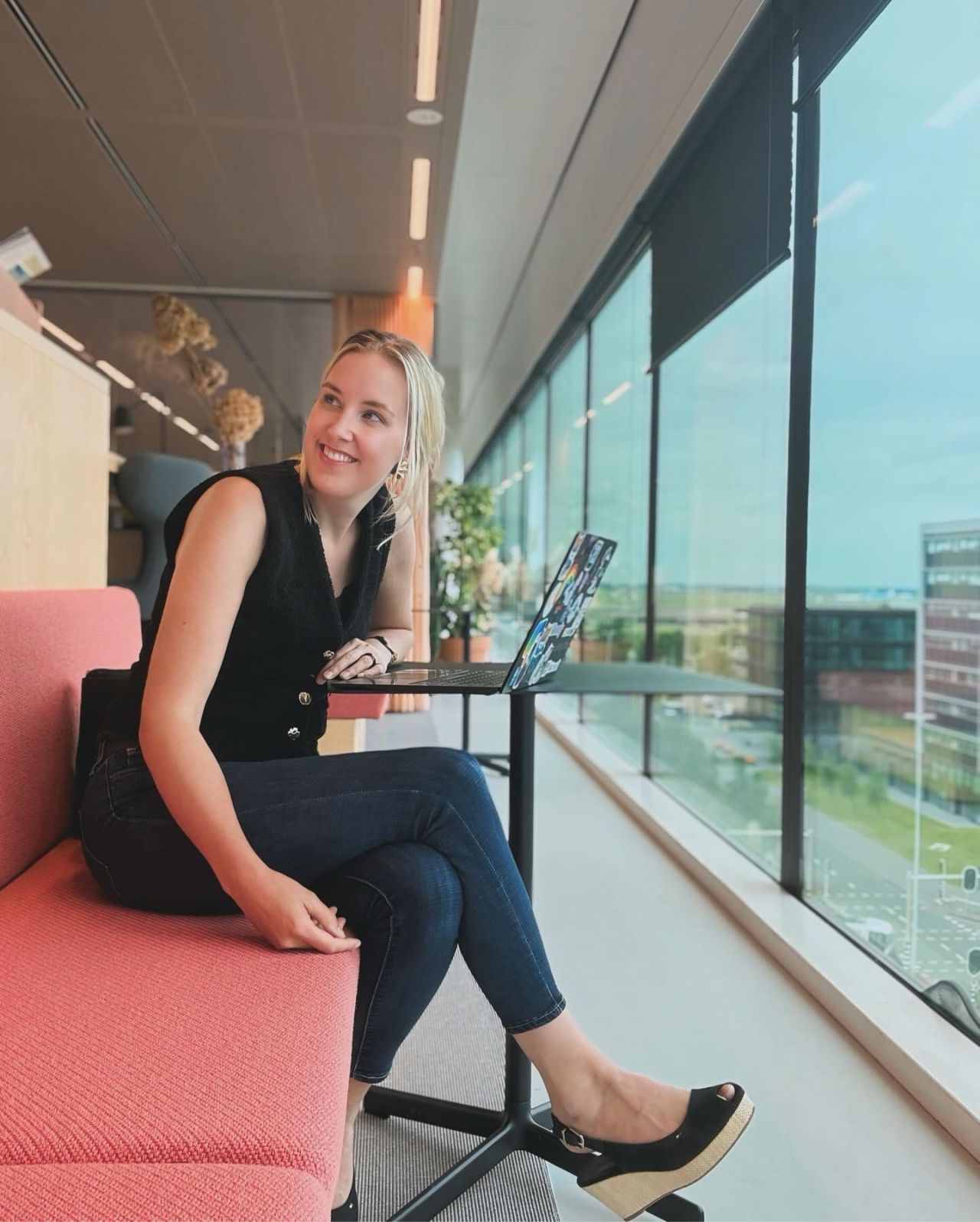
They met in a Uber at the MVP Summit in Redmond. Somewhere between LinkedIn selfies, Femke Cornelissen and Pascal Brunner-Nikolla realized something was missing: an honest conversation space where two Microsoft MVPs from different countries could openly discuss what they are seeing, testing, and learning in the field. Not the official product pitch — the practitioner view. The result is Frontier Insights, a new LinkedIn Live series about the latest developments in the Microsoft Copilot ecosystem.
What is a Frontier Firm?
Before diving into the program details, it is worth pausing on what “Frontier Firm” actually means as a concept. The confusion is understandable: it is both a mindset and an access program, and the two are often mixed up.
“It’s not a badge you earn — it’s a way of thinking you adopt as an organization.” — Pascal Brunner, Microsoft MVP M365 Copilot
Femke adds that it is not just about individual productivity with AI. A true Frontier Firm thinks about AI across three layers: the individual employee, the team, and the organization’s processes — and ultimately its services. You are only truly AI-first when you do not just let people work with AI, but also redesign your organization around it. Most organizations are built on processes that are decades old. You do not change those in a quarter. But the urgency has never been greater.
The Frontier program: early access, not a guarantee.
Beyond the mindset, there is a concrete technical program. Activating the Frontier program in your Admin Center gives your organization access to the most recent Copilot features before they are available to all users — right now, that includes Copilot Cowork. A few practical steps are required to get started:
-
- Activate via the Microsoft 365 Admin Center
- Accept Anthropic as a sub-processor (required for Cowork)
- Pin Copilot Cowork manually in Teams or the M365 Copilot app
- Plan for extra rollout time if you are on an EU tenant
One nuance often overlooked: the Frontier program means earlier access, not perfect access. You are testing features still in development. That brings freedom, but also responsibility. Use the feedback options in the products actively — the thumbs up and thumbs down buttons matter. Pascal emphasized this after the MVP Summit: “Microsoft reflects on this feedback every year. They genuinely listen.”
You also do not need to enable the Frontier program for your entire organization. Assigning a dedicated group of AI champions or frontrunners is a smarter approach. It keeps the rollout manageable while building real internal expertise.
Europe and EU data boundary.
Copilot Cowork currently runs exclusively on Anthropic models, which falls outside the EU data boundary — but within the broader Microsoft trust boundary. Pascal expects this to change, but for now European organizations sometimes need to wait a little longer. It is one of the recurring realities for practitioners in the Netherlands, Switzerland, and across the EU.
Copilot Cowork in practice: what it actually does.
The first real-world results from the past week were impressive — and sometimes startling. Femke asked Cowork to clean up her inbox. The result: a full overview of all open emails with suggested next actions, 20 irrelevant mails deleted after one confirmation, and automatic calendar scheduling that checked colleagues’ availability. “This is what I wanted two and a half years ago. It’s actually here now.”
Pascal’s experience was equally striking. He asked Cowork to review his calendar for the coming week and flag low-priority meetings. Cowork identified one appointment a colleague could cover, asked if Pascal wanted to delegate, and then — without any further instruction — sent the decline email and a full briefing message to the colleague. “It knew the consequence of declining. That’s the difference.”
Femke also tested Cowork together with computer use for her LinkedIn community management. Every day she would manually search for new community members on LinkedIn and send each one a personalized direct message. With Cowork handling the task: fully automated, including the correct name in each message. “I was flabbergasted. I’ve been doing this by hand every single day.”
Another use case that generated real discussion: using the Researcher Agent with multiple models simultaneously. One prompt returned two separate answers — one from Claude, one from ChatGPT. Claude started from Femke’s email and calendar. ChatGPT focused on broader context first. The outputs were noticeably different. “You can actually see how the models think differently. And then you choose what fits your situation best.”
Microsoft as the “UI for AI”.
Microsoft is increasingly positioning Copilot not as a single model, but as the interface where multiple AI models converge. Anthropic is available now, and it will not stop there. That raises a forward-looking question: what happens to the skills and memory you have already built in ChatGPT, Claude, or other tools?
“I think we will soon be migrating not just data but skills and memory into Copilot,” says Femke. “Everyone has built context in their own tools. How do we bring that together? That is going to be our next challenge.” Pascal agrees: “Since Work IQ became more prominent, the answers inside Copilot have gotten noticeably better. Combine that with context from other providers and the multi-model approach, and there is enormous potential here.”
Custom Skills in Cowork
Pascal also spent part of the weekend experimenting with custom skills. Microsoft currently offers 13 pre-built skills — calendar management, email handling, and others. You can build up to 20 custom skills on top of those. Pascal tested a weekly project report skill. The results were mixed: “They are still catching up. But the concept is exactly right. Think about all the repetitive prompting we do every day. Skills have the potential to handle a lot of that.”
What’s coming next.
The conversation closed with a question to the audience: what do you want to see in upcoming episodes? Several topics are already on the shortlist. Femke spent four or five hours figuring out the best way to build a personalized presentation with company data in Frontier. That kind of practical scenario is exactly what the series wants to walk through. Guest speakers who want to share what they have built are welcome too.